Indifference
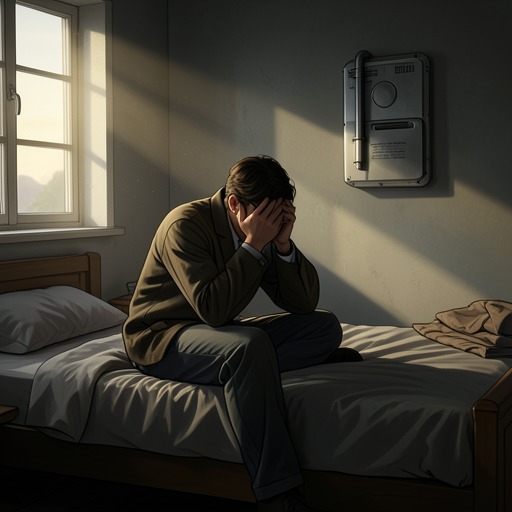
The Myth of SisyphusIndifference is a central condition of the absurd life: the lucid recognition that the future offers no guaranteed meaning, consolation, or divine appeal, combined with the decision to use fully what existence provides. Its apparent coldness conceals an active discipline. Rather than escaping the conflict between human consciousness and an unreasonable world, indifference keeps that conflict visible and turns it into a basis for revolt, freedom, and experience.
Definition and Ground of the State
Indifference emerges when consciousness refuses to reconcile the human demand for rational order with a world that cannot be reduced to a rational principle. The absurd person cannot honestly introduce a hope that is absent from lived experience, nor can he erase the contradiction by a simple act of belief. The conflict therefore has to be preserved through constant, renewed awareness. In this sense, indifference is not emotional emptiness: it is the refusal to let an unpossessed future or an invented explanation govern the present.
This stance changes the texture of ordinary life. The abstract problem becomes embodied in the body, affection, creation, action, and human nobility. The anonymous world of “one” is no longer allowed to absorb the individual completely; revolt and lucidity enter daily existence. None of the spiritual conflicts is finally settled, but each is transformed from an abstract dilemma into a lived confrontation. The resulting condition is described through the paired images of the wine of the absurd and the bread of indifference, nourishment for a greatness that exists inside a mad world rather than beyond it.
Indifference to the Future and Quantity of Experience
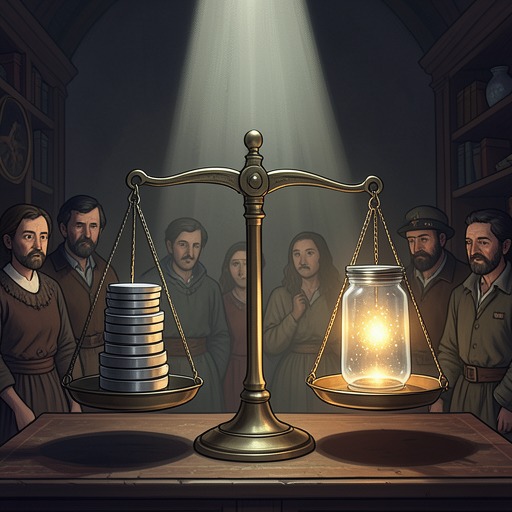
In a universe without guaranteed meaning, life means, for the moment, indifference to the future and a desire to use up everything that is given. Belief in a meaning of life ordinarily entails a scale of values: it distinguishes what is higher from what is lower and directs preference toward an imagined good. Belief in the absurd reverses that arrangement. It substitutes the quantity of experiences for their supposedly superior quality and replaces value judgments with factual judgments.
The decisive standard is therefore not the best living but the most living. This does not mean that every experience is declared equally pleasant, noble, or desirable; it means that no experience can be measured against a transcendent scale that the absurd person does not acknowledge. Freedom likewise has meaning only in relation to a limited fate. The person who accepts that limit does not risk hypothetical consolations or speculate about an unreal future. Experience becomes a field of intensified contact with what is present, while lucidity remains the one element that cannot be surrendered.
Moral Consequences and the Rejection of Permission
Indifference must not be confused with moral license. The cry associated with Ivan Karamazov, “Everything is permitted,” is presented as a bitter acknowledgment of the absence of a God who gives life its meaning, not as an exultant release from restraint. The certainty of such a God would be more attractive than the prospect of behaving badly with impunity; the bitterness lies precisely in the fact that there is no meaningful choice between those alternatives.
The absurd does not liberate by making every act admirable or harmless. It binds the person to the consequences of action and denies that “Everything is permitted” means that nothing is forbidden. It does not recommend crime, and it restores remorse to futility without abolishing the need to consider what actions produce. Duty remains as legitimate as any other experience, even if virtue may be chosen through whim rather than obedience to an absolute moral law.
Accordingly, the absurd mind does not divide people into metaphysically guilty and innocent beings. It can recognize responsible persons, but not guilty ones in the ultimate sense. Consequences must be faced calmly, and past experience may serve as a basis for future action, yet no final ethical system emerges from the unreasonable order of the world. What develops instead is an ethic demonstrated in living examples: time prolongs time, life serves life, and lucidity remains the governing condition.
Don Juan and the Practice of Quantity
Don Juan provides a concrete image of indifference joined to the ethic of quantity. He is an ordinary seducer, but a conscious one, and that consciousness makes him absurd. Seduction remains his condition in life; he does not pass through a moral conversion or change into a better kind of person. The familiar speeches and conventions of seduction matter less than their practical efficacy, because his aim is not to construct a defensible moral theory but to continue acting within the limited life available to him.
His relation to time distinguishes him from a collector. Don Juan does not accumulate women as a store of past possessions from which he can live later. He exhausts their number and, with them, his chances of life. He rejects regret, understood as another form of hope, and is incapable of looking at portraits. The image of the portrait fixes the past, whereas Don Juan remains in motion with time itself. His indifference therefore does not remove him from experience; it prevents experience from being converted into a museum of former victories.
Don Juan is not simply an immoralist. He possesses a code formed by his likes and dislikes, and his conduct retains a relation to human honor. His declaration to the Commander that he has honor and keeps his promise because he is a knight shows that the ethic of quantity does not erase every rule. What changes is the source and status of the rule: it is no longer guaranteed by divine order. The saint seeks quality, while Don Juan realizes quantity in action; the contrast exposes two incompatible ways of responding to a world whose profound meaning cannot be trusted.
Narrative and Thematic Significance
Indifference gives the absurd position its practical shape. It protects lucidity from the temptation to leap into religion, prophecy, or metaphysical reconstruction, while also preventing revolt from becoming mere abstraction. The absurd person is tempted to accept a leap but refuses to do what is not fully understood. This refusal produces no comforting resolution. Instead, it makes the present an exacting kingdom in which the sharp edge of every problem remains intact.
The state is paradoxical because it combines distance from ultimate value with heightened participation in finite life. It refuses hope, yet it does not refuse action; it denies transcendent hierarchy, yet it does not deny consequences; it rejects consolation, yet it permits body, affection, creation, and human nobility to recover their places. Indifference is thus not the opposite of passion but the condition under which passion can be lived without appeal. Its force lies in holding the contradiction open and drawing strength from the life that remains.